

AI SELF STUDY
Figured out where AI actually helps ship creative work, and where you still have to show up yourself.
AI-Assisted Workflows | Creative Systems | Iterative Production
TL;DR
WHAT
A set of real, public projects where I use AI tools to move faster in concepting and production while keeping human judgment, editing, and taste firmly in charge.
WHY
I wanted to understand where different AI tools actually help in day-to-day creative work, where they break down, and what still requires taste, editing, and restraint.
STATUS
Ongoing independent study with shipped work in the wild.
FOCUS
Turning different content ideas into consistent, audience-ready output through strong storytelling, clear pacing and hooks, cohesive branding, and quality control across many iterations.
EXAMPLES (shipped work)
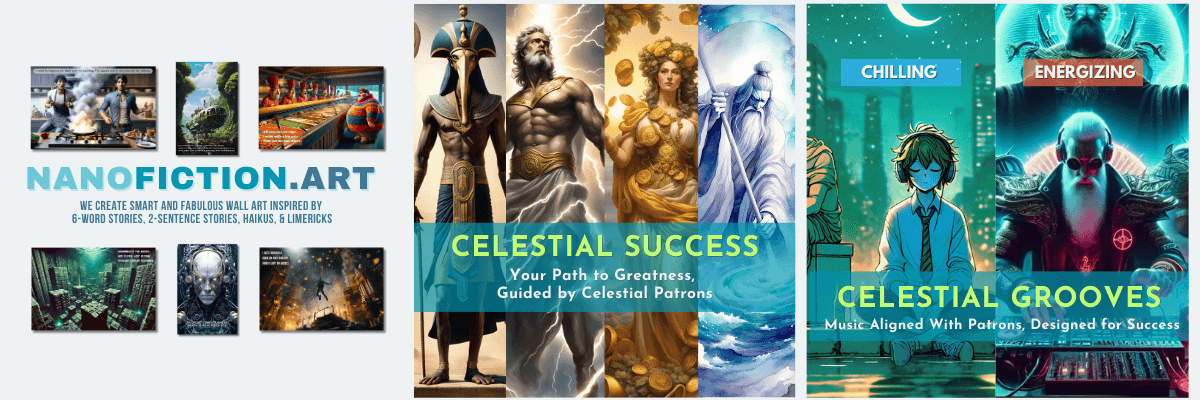
Nanofiction.art: https://nanofiction.art
Celestial Growth and Success: https://www.youtube.com/@CelestialGrowthSuccess
Celestial Grooves for Success: https://www.youtube.com/@CelestialGroovesforSuccess
Each is explained in more detail below.
Deeper Dive: How I Approached This Work
This independent study wasn't about chasing AI novelty.
It was about using new tools in real workflows and paying attention to what actually held up.
Across these projects, I focused on:
•
Using AI as a multiplier, not a replacement
•
Designing repeatable systems, not one-off outputs
•
Shipping work publicly and learning from real constraints
•
Knowing when to automate, when to step in, and when to stop
The work emphasized rapid iteration. Vibe coding and AI-assisted UX tools were used to move quickly through ideas, test assumptions, and surface edge cases without over-investing early.
Constraints:
•
Hundreds of outputs must maintain the same tone, style, and level of quality.
•
Similar structures are reused, but results must still feel distinct.
•
Inputs may vary widely, requiring flexible handling without degrading output quality.
HERE THERE BE DRAGONS
These three projects were built and shipped publicly during an independent study into AI-assisted creative workflows. Each explored a different content form - short fiction wall art, mythology-driven affirmation content, and music-based meditation - but they all ran on the same operating principle.
Design repeatable systems. Ship publicly. Know when to automate, when to step in, and when to stop. The judgment is always human.
The UX connection isn't incidental. Designing hundreds of outputs at consistent quality, under tight constraints, for a live audience - that's the same discipline that makes product design hold up outside the slide deck.
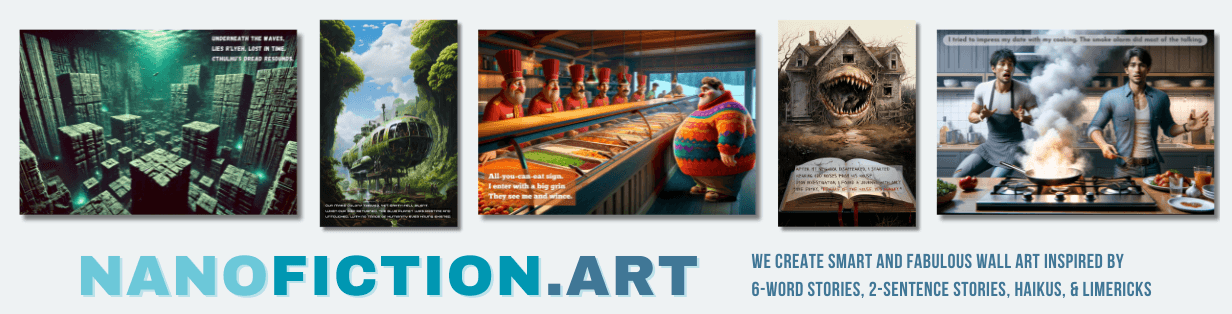
NanoFiction.art
Nanofiction.art
100+ pieces shipped · Commercially self-sustaining
Very short stories paired with visual concepts, published as finished wall art in poster and canvas formats.
The constraint is extreme - a complete story in almost no room - which forces the kind of clarity that most writing avoids.
What I focused on:
Telling a complete story with almost no room to maneuver
Translating written ideas into clear visual direction
Maintaining a cohesive look and tone across many pieces
Making fast editorial decisions about what worked and what didn't
What made it hard:
Maintaining a cohesive visual language and consistent tone across 100+ distinct pieces without letting the work drift or feel factory-made. Fast editorial decisions - what to keep, what to kill, what's actually good enough - at scale.
The unexpected insight:
Extreme narrative constraints are the same pressure as first-screen UX. You get one moment. Either it lands or it doesn't. Writing 100 of these sharpened that instinct faster than any design exercise. A blooper reel documents the failed generations and edge cases from early experimentation.

Celestial Growth and Success
youtube.com/@CelestialGrowthSuccess
6,000+ subscribers within first year
A short-form meditation-style channel exploring how carefully paced language and repetition can guide attention and emotional state - especially when attention spans are short and trust is thin.
What I focused on:
Shaping ideas into short, repeatable formats without losing clarity
Maintaining a consistent tone across many pieces so the work doesn't drift
Practicing restraint - knowing how much guidance helps and when less is better
Designing for state of mind, not just passive content consumption
What made it hard:
Keeping voice and tone consistent across many pieces so the channel feels coherent rather than drifting. Reusing a clear structure while varying the content enough that nothing feels recycled. Deciding when less guidance helps more.
The unexpected insight:
Designing for emotional state - not just content consumption - is closer to onboarding and empty state design than it first appears. The question isn't 'what does this say?' It's 'how does this leave someone feeling?'
6,000 subscribers in year one validated the format, not any single piece.

Celestial Grooves for Success
youtube.com/@CelestialGroovesforSuccess
500+ subscribers within six months
A companion channel to Celestial Growth - ambient music designed to support focus without competing for attention. Built as a deliberate supporting layer, not a standalone product.
What I focused on
Designing something that supports focus rather than demanding it
Keeping audio, visuals, naming, and tone aligned so the work feels cohesive
Iterating toward a specific feel that supported focus and continuity
Creating a sustainable way to produce content without constant reinvention
What made it hard:
Designing something meant to stay in the background. Making sure audio, visuals, naming, and tone support each other without any one element pulling focus. Building repeatable structures that scale without constant reinvention.
The unexpected insight:
The best interfaces often work the same way - present but unobtrusive, supporting people quietly rather than demanding their attention. Designing something intentionally secondary sharpened my sense of hierarchy more than designing the primary thing ever did.